A Brief History of First Lutheran Church
In the year 1870, the Swedish people first began to settle in Centerville. Some came directly from Sweden while others came from nearby settlements of Munterville, Ottumwa, and New Sweden.
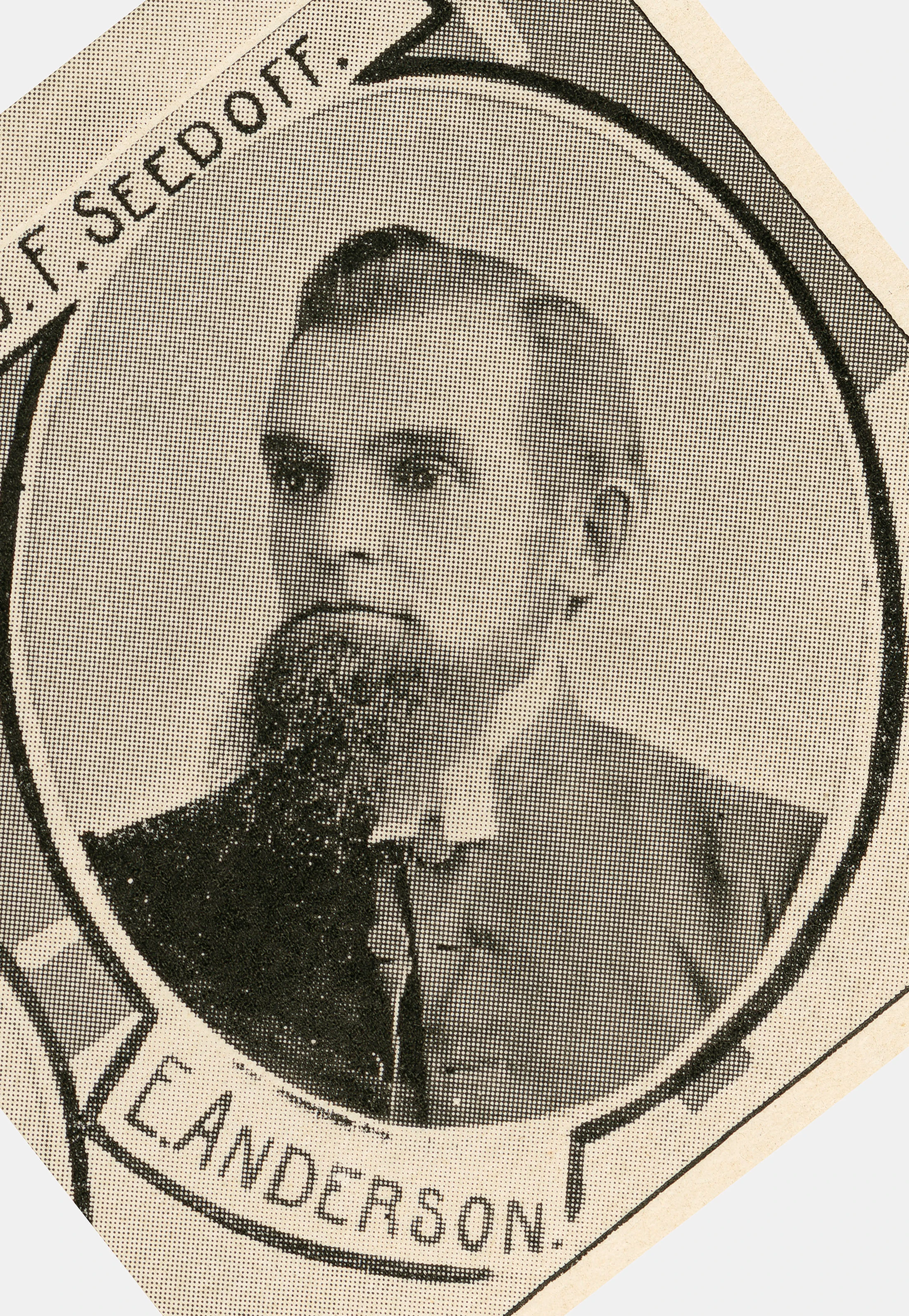
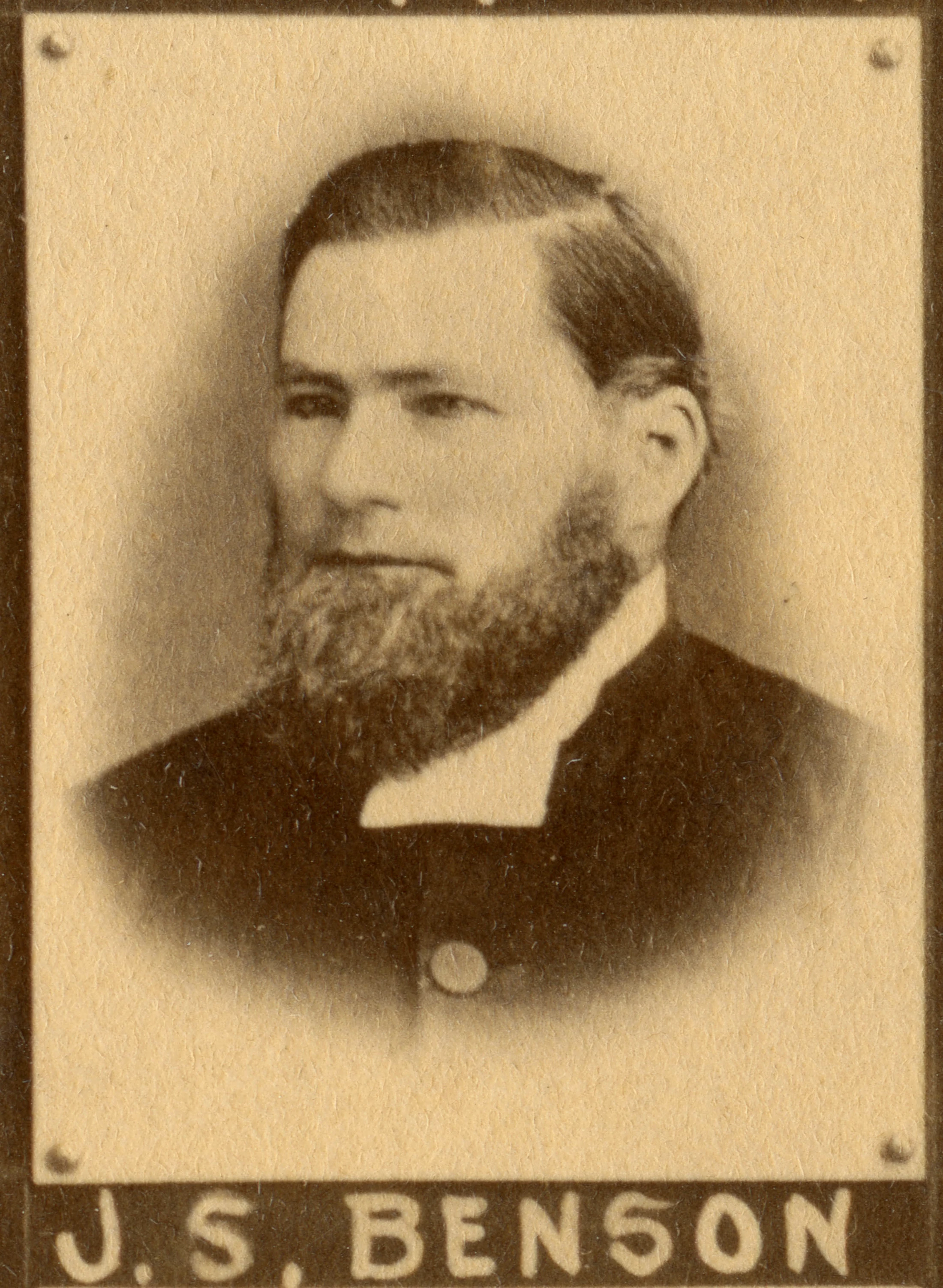
In the years of 1879-1880 Pastor J.S. Benzon of the New Sweden congregation in Jefferson County preached occasionally in Centerville. Peter Poulson, August Carlson, J. A. Nelson, S. John Peterson, Andrew Anderson and several others opened up their homes for the first devotional services. These early settlers had secured employment with the Rock Island railway, which had begun to open up in this territory. Amid such humble beginnings our Christian congregational work was begun. Pastor J.S. Benzon organized the congregation on May 30, 1881 at the home of S. John Peterson with 22 charter members. Thus began the Swedish Lutheran Congregation in Centerville. In July 1881 at a congregational meeting they petitioned the Augustana Synod to be received into the Synod at the next synodical meeting and also to purchase several books for the congregation at a cost of $250.
The first frame church building was built in 1881 on 19th and Walden Streets. It was used for divine services the first time at a New Year’s service in 1882 and was dedicated in 1883. An addition of 14 ft. was made in 1887 when a chancel and tower were added. The church bell was placed in the tower belfry in 1898. The first frame structure was built at a cost of less than $900, subscriptions for which were secured by a building committee. Carpenters within the congregation erected the building. Andrew Burkland laid the stone foundation for $95.
The church parsonage was built on a lot adjoining the church in 1891 and was made modern in 1914.
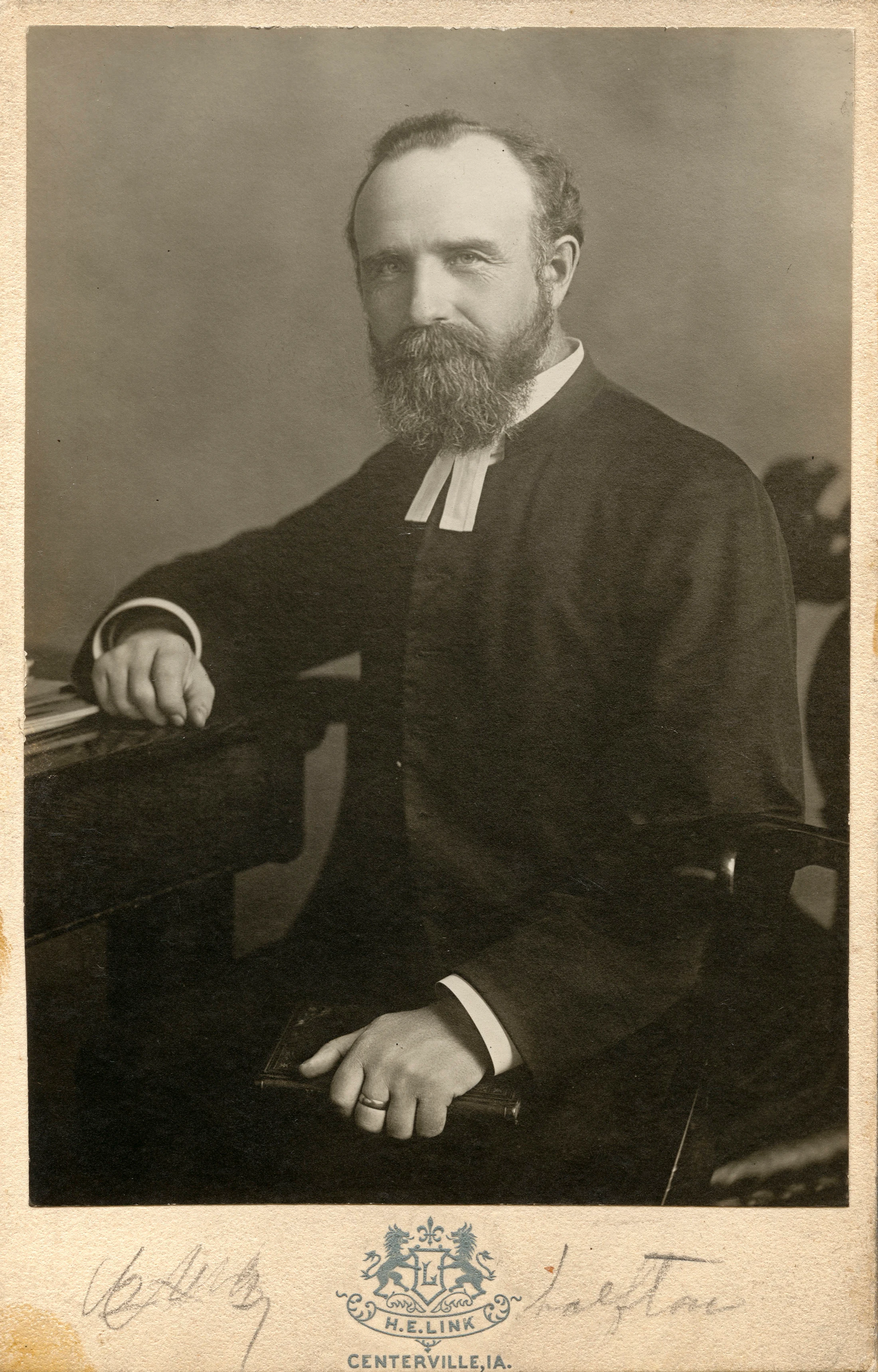
Pastor A.W.P. Elfstrom served First Lutheran from 1902-1910. His salary was $300 per year. He had to depend greatly on gifts of food from the gardens and farms of generous members of the congregation. While serving in Centerville, he also served congregations in Buxton and Hiteman, IA. Father Loftus of the Catholic Church served congregations in the same areas and became good friends with Pastor Elfstrom. They hired a horse and buggy together since that was the only means of transportation in those days.
The outstanding event of the church year was the Thanksgiving bazaar and co-op dinner, an all day affair. The day after was clean up day and all the women and children came to clean up and eat the leftovers.
Most weddings were held in the study of the parsonage.
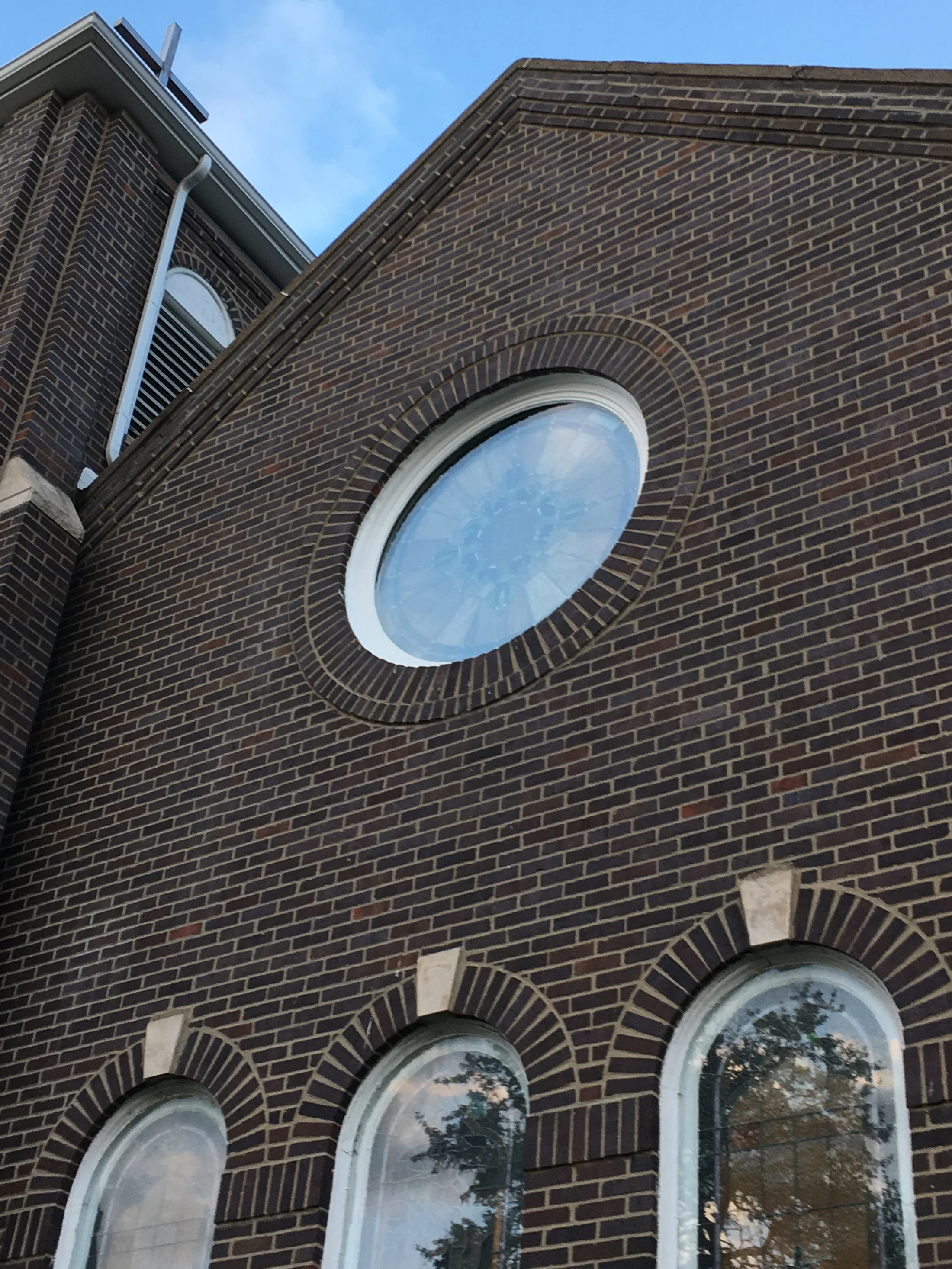
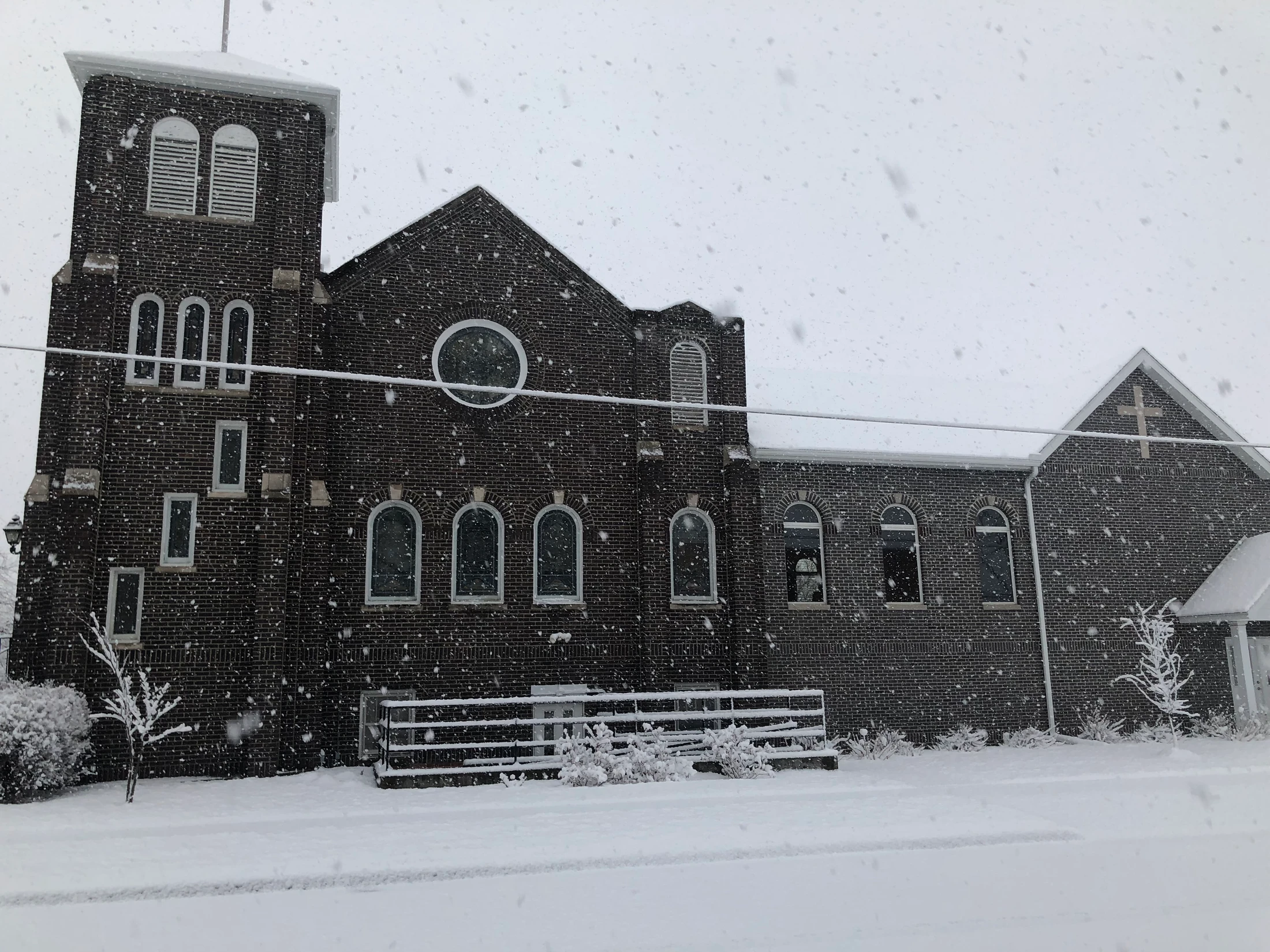
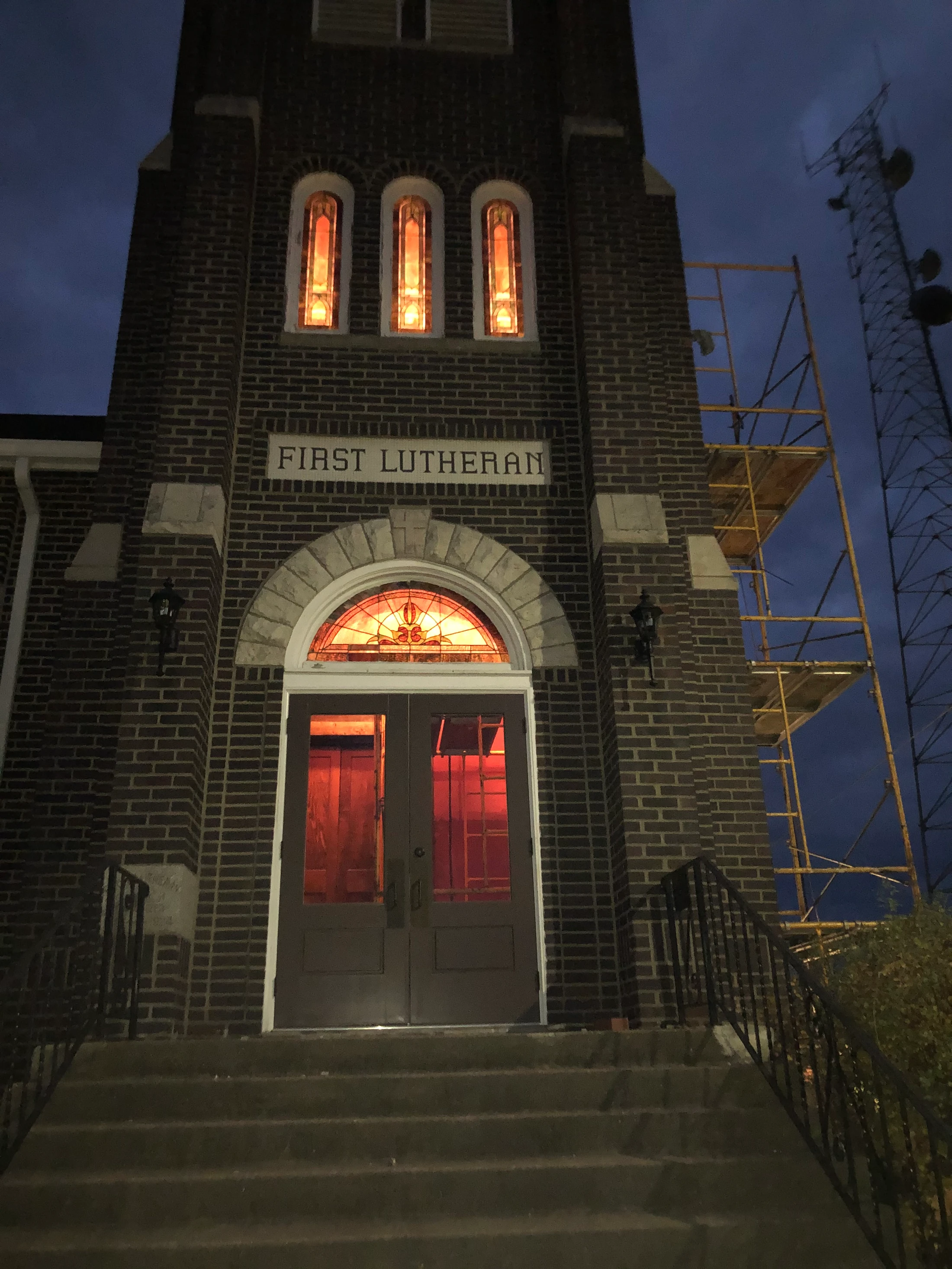
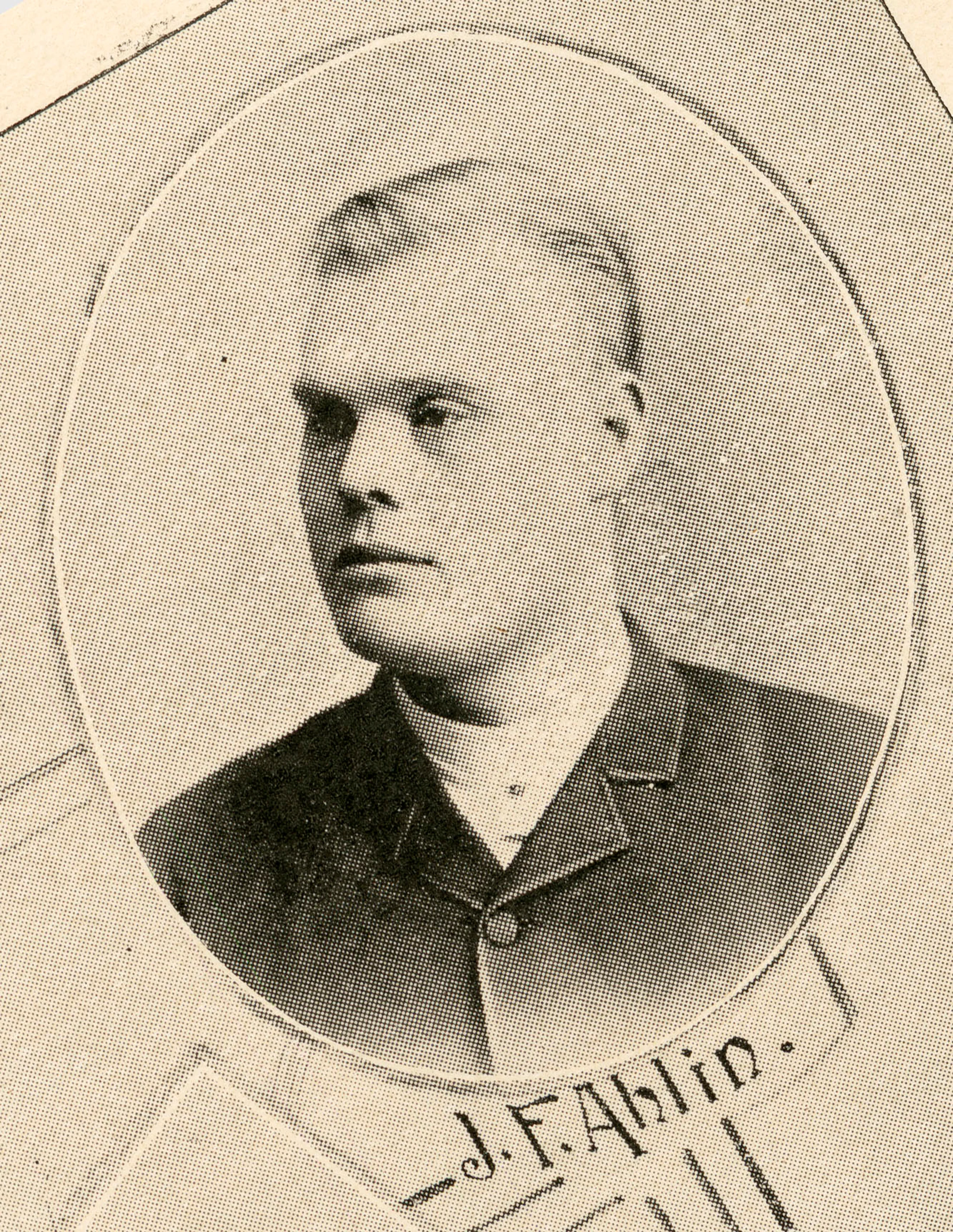
In 1912 the Young People’s Society of the congregation purchased a new building lot on the corner of South 15thStreet and Sheridan Avenue. This was in an area known as “Howell’s Annex.” The new brick building was erected on this lot in 1924 by Staley-Shellburg, contractors, at a cost of $18,000. The cornerstone was laid on August 3, 1924 (see following pages for cornerstone celebration program) and the church building was dedicated June 22, 1925. Pastor Frank E. Peterson was pastor of the congregation and chairman of the building committee. Other committee members were Oscar Bergstron, Louis Anderson, Alfred Burkland, Victor Shellburg (contractor), Gust Jacobson, Claus Johnson, L.J. Larson, Peter Lindahl, T.H. Lundgren, and S.P. Pearson. The building committee secured subscriptions for the new building project. Pastor O.A. Elmquist, who was a field missionary of the Iowa Conference, assisted them. The original subscriptions covered all but $6,000 of the needed funds.
The old building was sold, torn down and used to rebuild a home that had burned at 1020 N. 18th Street.
There was no parsonage at First Lutheran but the congregation furnished a residence at the Alexandria Apartments for Pastor Wenzel Bloom in 1928. These were difficult years as Pastor Bloom reflected, “The nation suffered the worst depression of record. Business places, fiscal centers and churches were involved in this depression. The sacrificial love and loyalty of members of the congregation, the devotion of its many organizations and the support of the Conference weathered the depressed circumstances adequately.”
Pastor and Mrs. Bloom came to Centerville in “a little tan, rumble seated Essex” and began a seven year ministry in our nearly new edifice. He conducted morning and evening services with an afternoon service at our out-of-town congregation in Albia. Since the paved highway ended at the city limits, he used the electric train operated by Iowa Southern Utilities to travel to Albia.
In 1930 Pastor Bloom presided at the wedding of Fred Burke to Bonnie Porter. Burke used the alias “Richard F. White” to sign the marriage certificate. Burke was one of the shooters in the St. Valentine Day Massacre in Chicago. After the fact, Pastor Bloom said he had reservations about marrying the couple, saying the bridegroom had “the appearance of a man who leads a somewhat loose sort of life.”
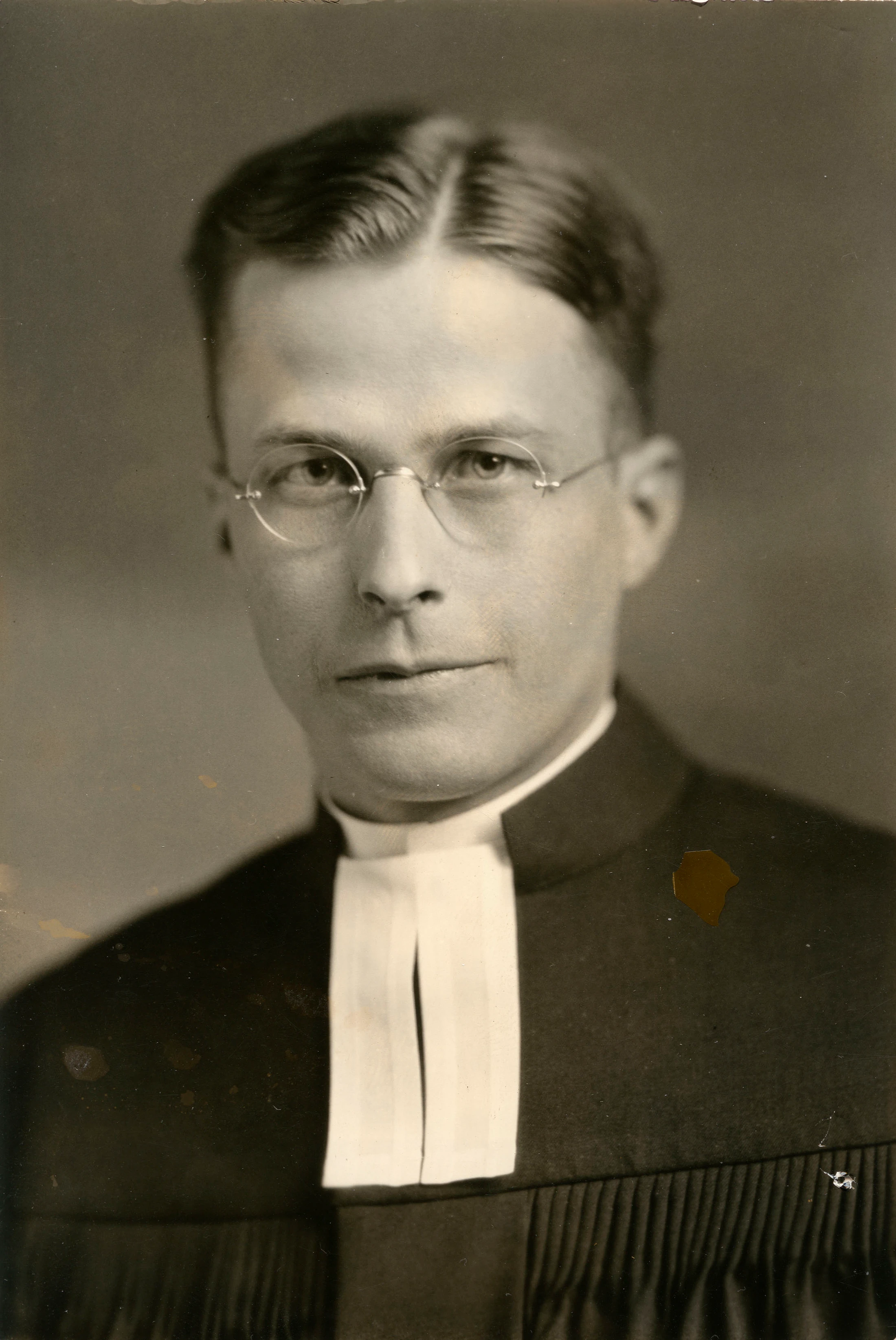
In 1935 Pastor Elmer Sahlgren was called and served a two point parish in Centerville and Munterville. A parsonage had been purchased and the faithful and dedicated women of the Ladies Aid Society accepted the monthly payments on the parsonage.
Pastor Sahlgren wrote of his time in Centerville that due to economic conditions and to some degree church work in general in Centerville, as well as everywhere, could be described as a “holding action.” Some buildings on the town square were vacant but the doors of First Lutheran were always open and a faithful congregation of young and old entered for worship regularly.
“If the general economic conditions were not too promising, more ominous was the situation in the world at large. So during these days there were demands on our young men to register for the draft. Well do I remember when a group of fine young men left home to go to Des Moines for induction into military service.”
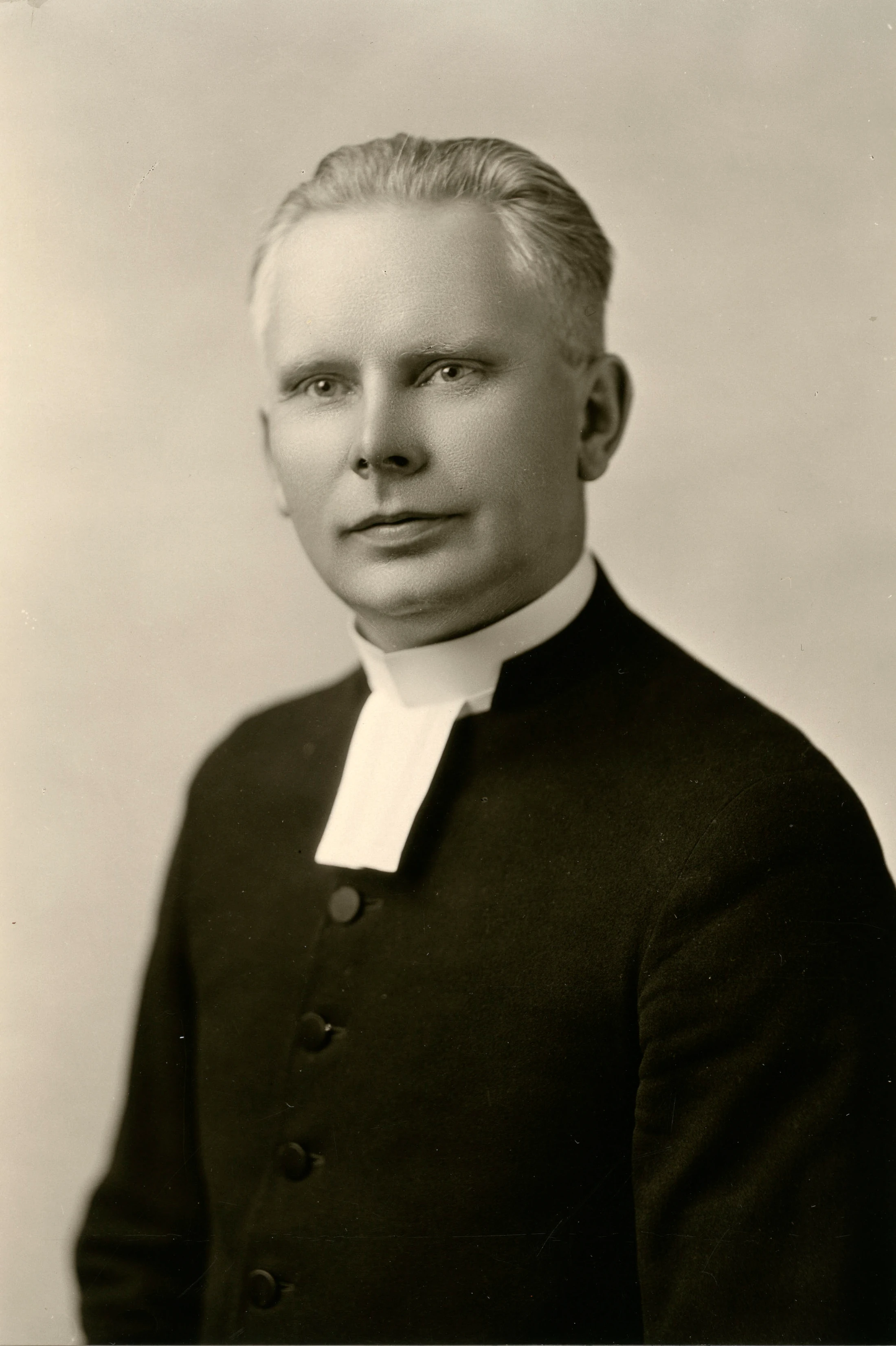
Pastor John Benson served our congregation from 1946-1948. During this time an electric organ was installed.
Eugene Larson was pastor from 1948-1950. He told stories of Oscar Anderson who was sexton of the church. Oscar was always at the church early to take care of the furnace, which regularly acted up. Oscar also served as acolyte and would use the seat of his britches to light the matches for the altar candles.
Pastor H.O. Lindeblad served from 1950-1952. During his time here as pastor, First Lutheran was on so-called “Mission Aid,” receiving financial assistance from the Board of American Missions. Each month reports had to be sent in on how things were going – church attendance, number of calls made, etc. Sunday School attendance was growing as well as worship services and the old coal bin in the church basement was renovated for a Sunday School meeting room. Indirect lighting was installed in the church. Once a month Sunday services were broadcast on the local radio station. Also during this time our church council voted to go self-sustaining, having the faith to go it alone on the financial program.
One of the most active organizations was the Couples Club, which met regularly including both members and non-members of the church for good food, recreation and fellowship.
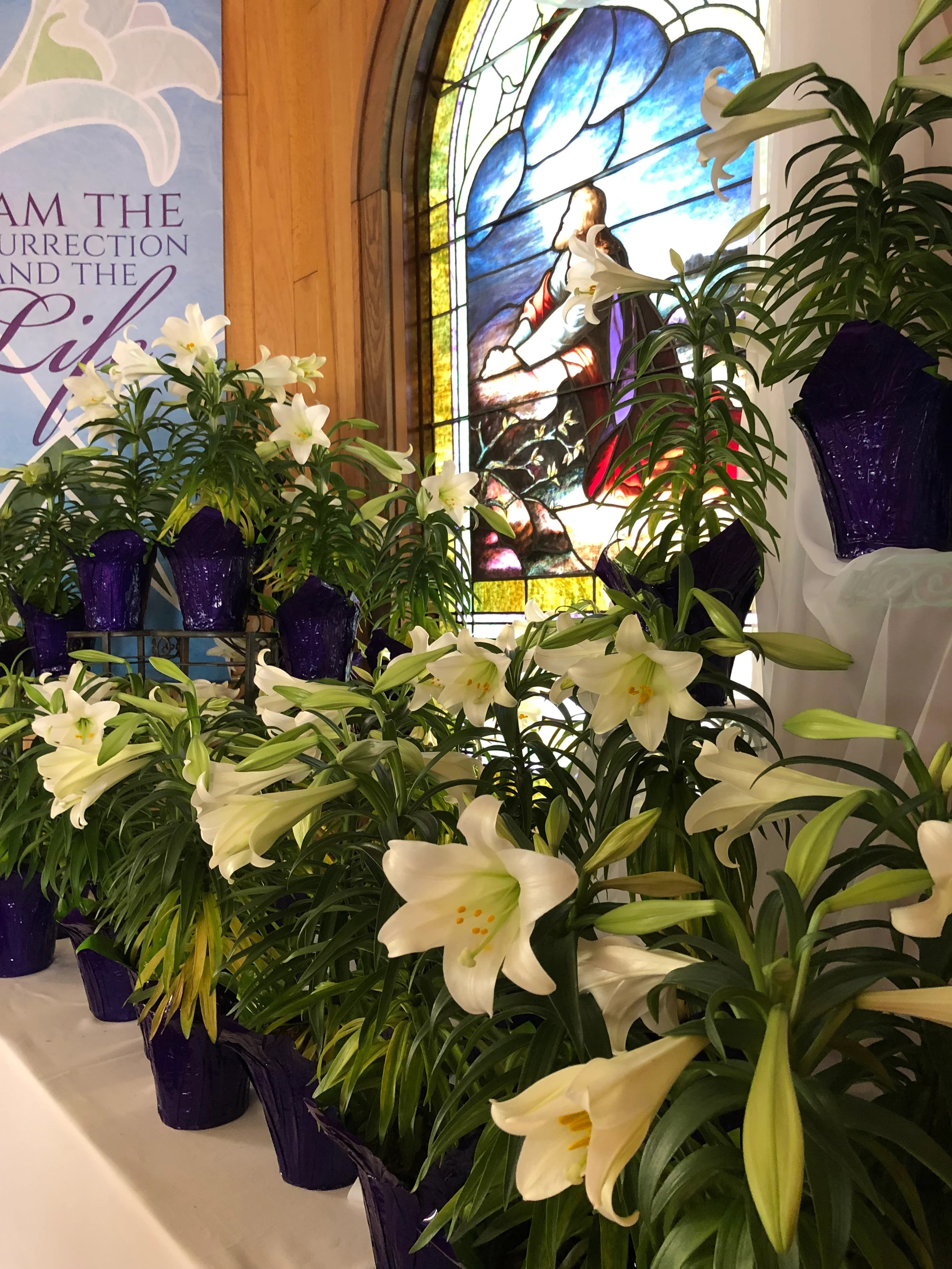
Late July 1954 brought First Lutheran a young, single, inexperienced, little preacher. Pastor Melvin Suhr holds the record for the longest tenure in this congregation (1954-1968). In 1955 and 1956 the basement was practically remade. A committee chose new, blue-green carpeting as the new color scheme in the sanctuary. Special days in the church were celebrated in special ways – the beautiful Easter flower garden with the life-sized painted figure of Christ, the rows of candles down the center aisle at Christmas, and a huge Advent wreath that hung from the highest point of the chancel arch.
The youth program at First Lutheran was slow going at first but became the most active young peoples’ group among Centerville’s churches. Kids sang in the choir, gave sermons, went to Bible camp and Leadership School, produced their own programs and according to “Pipe,” as he was lovingly referred to, “discussed topics almost to death.” Confirmation was sometimes a talking marathon. The youth also went to Holden Village, Southeast District overnights, and the Augustana Friendship Fair. They had their own campouts at Lake Wapello and J&K Cabin and played Bingo with nursing home residents. Also during this time the Ladies Aide was renamed the Lutheran Church Women.
Co-ops were popular, birthday party celebrations (with little cloth bags to put a penny in for every year of age you were) and vacation slides from Pastor Suhr were all memorable events as were fabulous church dinners with the best food from the best cooks anywhere. (This sentiment was shared by many pastors!)
Once a month, during Sunday School, Verga McCoy was the missionary lady who told stories about missionary work and children around the world. Sunday School classes were held all over the church building from the basement to the furnace room to the choir room and Pastor’s study and even in the kitchen. Attendance climbed from 75 to 115.
Pastor David Young served 11 years from 1968-1979. During this time the chancel area was remodeled, the new parsonage was built (15th & Walsh) and a satellite ministry in Unionville, Missouri was implemented.
Two ordinations took place during the 1970’s. Robert Sherman Elgin was ordained January 1974 and in September 1979 David Paul Johnson was ordained. Both men were sons of the congregation.
Pastor James Berka was called as minister on February 15, 1980. During this time storm windows were installed to protect the stained glass windows. In 1981 the church was completely redecorated in anticipation of the Centennial celebration. The attic was insulated, new light fixtures were hung in the nave and vestibule, new carpeting for the basement and new doors on the front of the church.
Lauren Ley was called as pastor in June 1988. During Pastor Ley’s tenure, the house at 410 E. Sheridan, adjacent to the church property, was purchased. The property was named “Felton House” in memorial to Jim Felton. This house was made into a refugee home where the first refugee family was housed for over 3 years.
Pastor Chris Thordason was called to serve First Lutheran in June 1993. Pastor Thordason had lots of experience in the area of construction. During his time in Centerville, he led people to do necessary repairs on the church property. It was also decided to turn the “Felton House” into the church offices.
Ron Darge was called to First Lutheran in a 3-year permanent interim situation. During Pastor Darge’s tenure, Jean Montegna, a layperson of the congregation, was appointed to fill the Parish Coordinator position. Pastor Darge was also an avid photographer. One of his images, Reconciliation, hangs in the church offices today.
Pastor Don Rothweiler was called to First Lutheran on a part-time basis in July 1997. Pastor Rothweiler was a talented actor. He enjoyed puppet ministry and acting. His portrayal of Martin Luther was superb and meaningful.
Pastor Alison Shane was called to First Lutheran in November 1998. Pastor Shane was First Lutheran’s first female pastor. Her husband, Kent, was also an ordained pastor and served at St. Paul’s Lutheran Church in Albia, Iowa.
Pastor Gary Kinkel came to First Lutheran as an Interim Pastor. Pastor Kinkel was also a Professor of Religion at Simpson College. Pastor Kinkel enjoyed talking about theology and kept people interested especially as the conversation would delve deeply into God’s work in the world.
Kathryn Franzeburg was called to First Lutheran in November 2004. It was decided at the same time to also call Pastor Kinkel as a Teaching Pastor.
In 2007, Nancy Pick, a long time member of First Lutheran, was ordained into the priesthood. Later in 2007, Jeremy McElvain was ordained as a Diaconal Minister of the church (He was later ordained into the priesthood in 2009 at St. John’s Lutheran).
During Pastor Franzenburg’s tenure, significant changes were made in the ministry of First Lutheran. In order for the congregation to be more thoughtful in ministering to the community, the congregation became a Reconciling in Christ Congregation. Part of this process was the development of a Welcome Statement:
As a community of the people of God,
we are called to minister to all the people in our world.
Though our world is a place of alienation and brokenness,
Christ calls us to reconciliation and wholeness.
We believe that we are a welcoming people and a safe place
and we affirm with the Apostle Paul that in Christ,
“there is neither Jew or Greek, there is neither slave nor free, there is neither male or female” (Galatians 3:28).
We also proclaim openly that the gospel is God’s gift to all people to be shared unconditionally. God’s gospel will be shared at First Evangelical Lutheran Church, member of the ELCA, without regard to age, race, gender identity, sexual orientation, financial or family status, physical or mental abilities. A diverse congregation will enrich, nurture, and challenge our life and ministry as we grow together in the body of Christ.
In continuing to make First Lutheran a welcoming place, it was decided that it was necessary to make the building handicapped accessible. This meant an elevator was needed along with restrooms on each level of the building. Additional fellowship space, classrooms and storage space were also needed. The Narthex was added on and dedicated in 2010. The cost of adding the Narthex was $522,000. Funds were raised and pledges given to cover the cost. Within three years, the project had been paid, leaving First Lutheran debt free.
Upon Pastor Franzenburg’s departure to Wartburg Seminary, Pastor Jeremy McElvain was called as the Interim Pastor. After a year of interim ministry, the congregation extended a call to Pastor McElvain in August 2013. He presently serves as the Presiding Minister. During Pastor McElvain’s time, a significant amount of energy has been placed in online ministry. The church has a new website on which people can view worship and other happenings at First Lutheran (firstlutherancenterville.org).
Pastor McElvain, who was an avid art collector also shared his artwork with the congregation, having pieces displayed throughout the church building. Additionally, he had artists display their work to raise awareness of much needed ministry needed throughout the community, particularly homelessness.
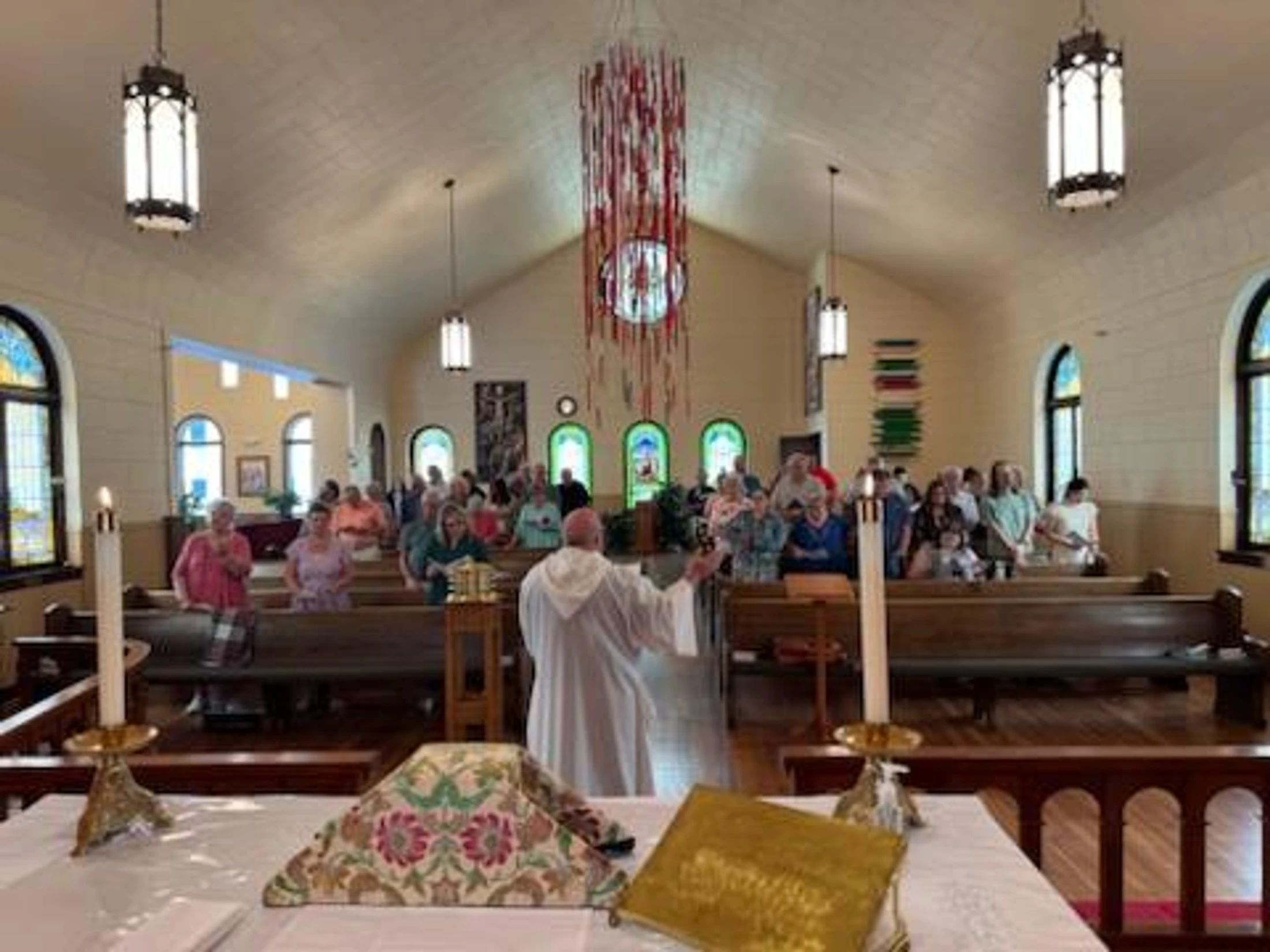
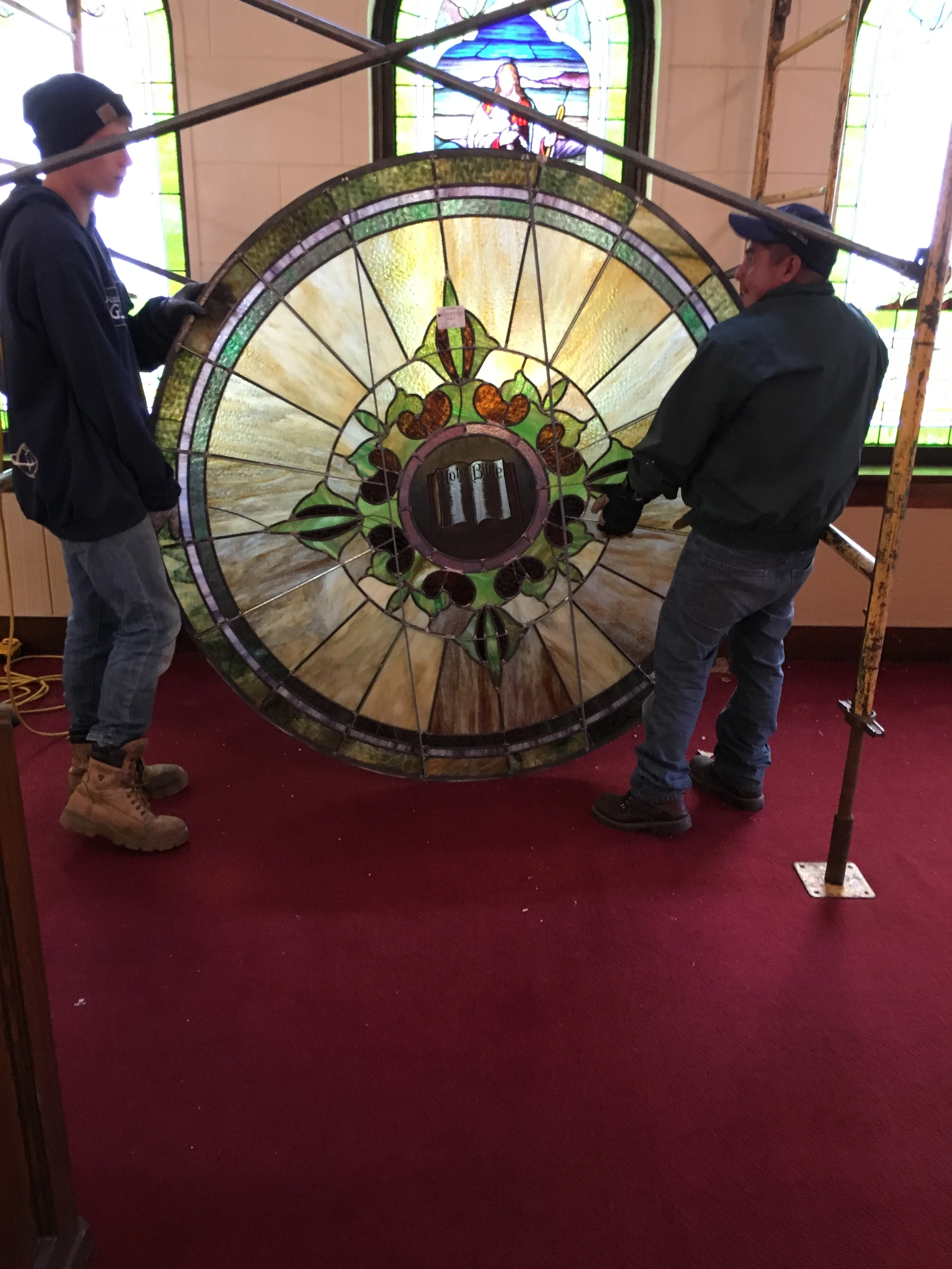
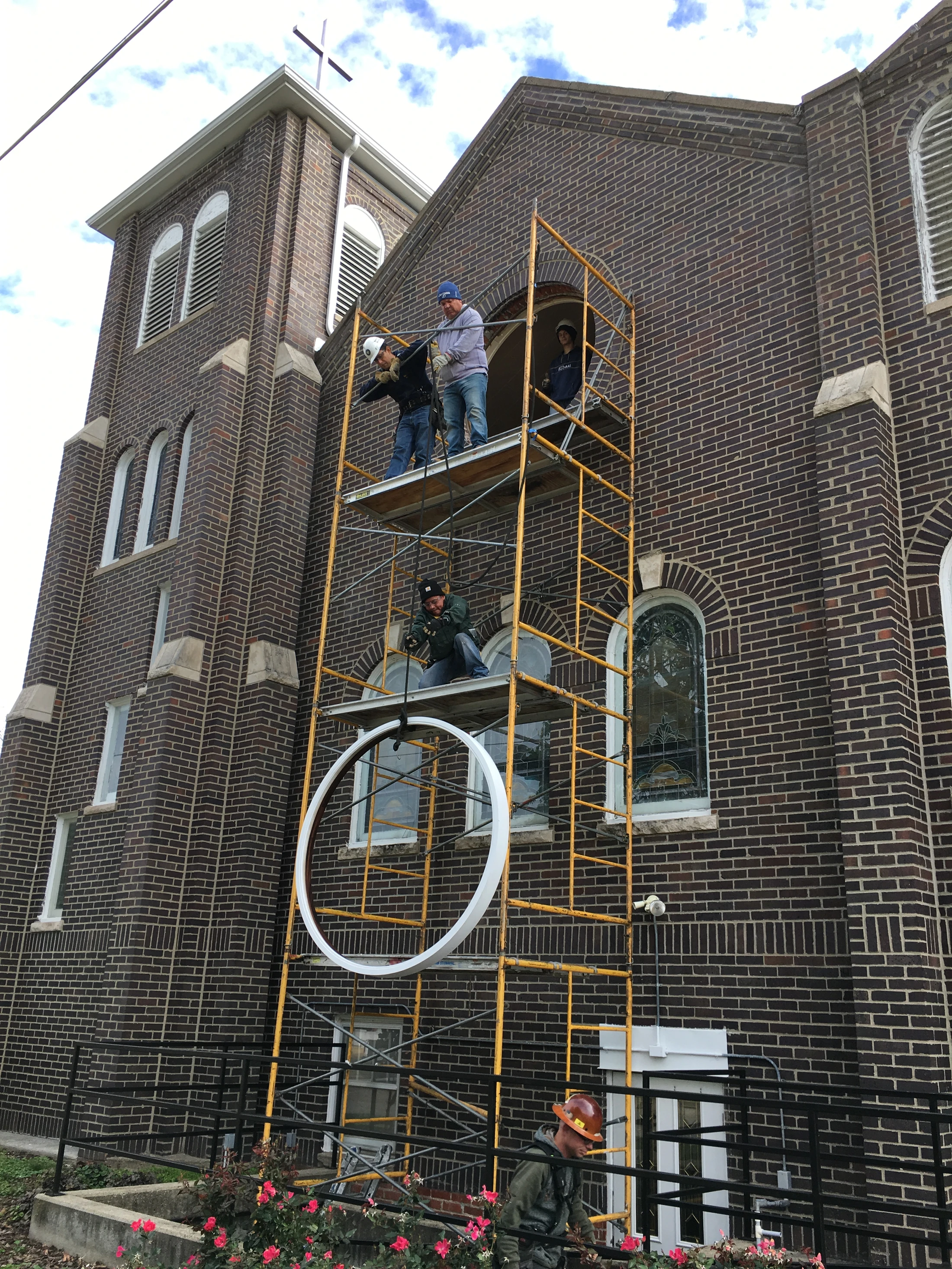
In 2017, the 500th Anniversary of the Reformation, the Stained Glass Rose Window in the back of the sanctuary was restored. Also a Prairiefire Crabapple tree was planted on the west side of the building to commemorate the Reformation Anniversary.
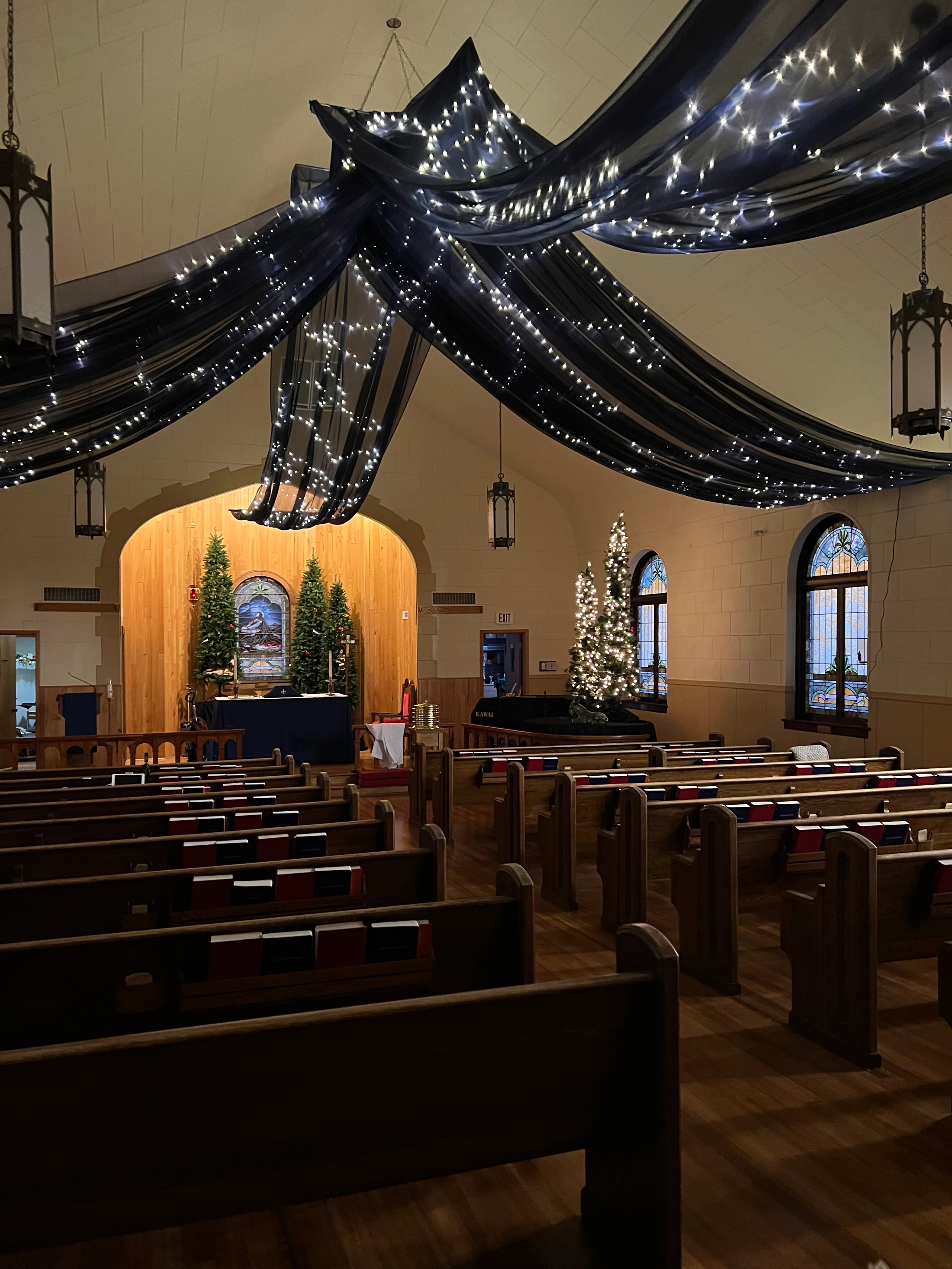
August of 2019, the carpeting in the sanctuary was removed and the original hardwood floors were completely restored. This was a done through a memorial for Sherman and June Elgin. Pastor McElvain, along with a crew of congregation members painstakingly removed old adhisive and sanded the floors. A walnut cross was inlayed in the floor, just in front of the altar. This cross maked the spot where baptisms occured, where caskets were placed for funerals, and from where the pastor would often preach.
In 2020, the Coronavirus hit the community. From March through July the congregation was unable to meet in person. Pastor McElvain made videos for worship and posted them online for people to watch. When the congregation finally was able to meet, even though they had to socially distance and could not sing or speak the liturgy in unison, worship could be watched online via livestream.
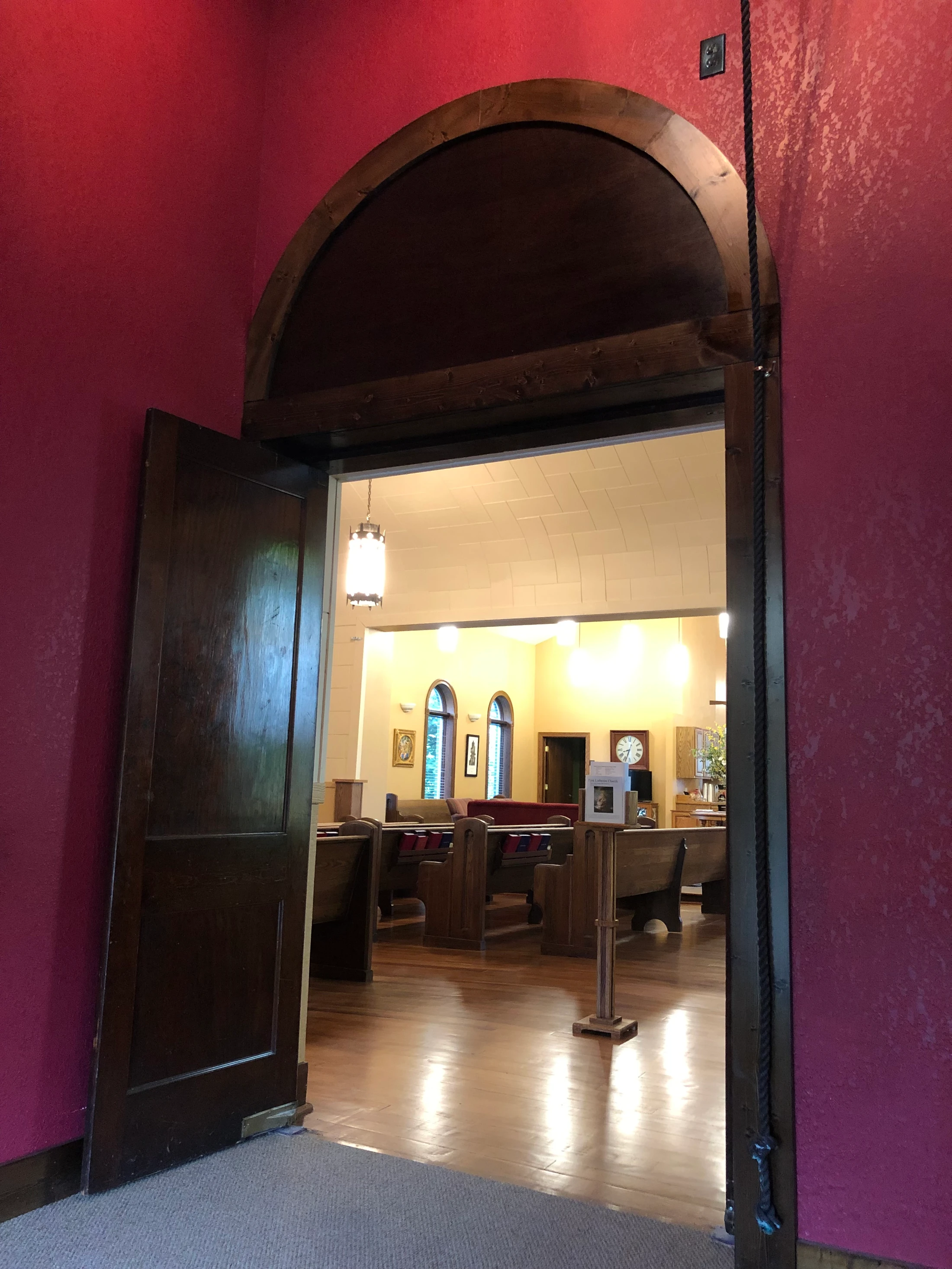
During the Coronavirus pandemic, the church building underwent another remodel. The origial belltower was gutted, ceiling removed and raised and the old stairs to the basement removed. In raising the ceiling, six (6) stained glass windows were revealed. They had not been visible from the interior before. Three of these windows, along with one from the sanctuary, were sent to Bovard Studios in Fairfield, Iowa for restoration. The remodel was done in memory of the Pearson family by the Stephens family.